

Pros and Cons of White Kitchen Cabinets
Last updated November 3, 2026
White kitchen cabinets have remained a popular choice for homeowners thanks to their timeless appearance, versatility, and ability to make a kitchen feel brighter and more spacious. Whether you're planning a complete kitchen remodel or simply updating your cabinetry, white cabinets can complement a wide range of kitchen styles.
However, like any design choice, white cabinets have both advantages and disadvantages. Before making your decision, it's important to consider factors such as maintenance, durability, lighting, and how they'll work with the rest of your kitchen. Below, we explore five pros and five cons of white kitchen cabinets to help you decide whether they're the right fit for your home.

5 White Cabinet Pros
1.) Looks Clean and Crisp
One of the primary benefits of white kitchen cabinets is their simplicity. They create a clean, crisp look that can brighten and modernize your space. White cabinets provide a neutral backdrop, allowing you to make a statement with other elements of your kitchen, including countertops, backsplashes, flooring, and appliances.
2.) Stands the Test of Time
Thanks to their versatile and classic appearance, white kitchen cabinets have remained a popular choice for decades. While kitchen design trends come and go, white cabinetry continues to offer a timeless look that can adapt to changing styles and finishes.
3.) Can Appeal to Future Homebuyers
Choosing a timeless cabinet color can be a smart decision if you're thinking about your home's future resale appeal. White cabinets offer a neutral look that can appeal to a wide range of buyers and make it easier for them to envision their own style in the space. While no cabinet color guarantees a higher resale value, white cabinetry can help create a bright, welcoming kitchen that feels current and inviting.
4.) Opens Up the Space
One reason homeowners gravitate toward white cabinets is their ability to reflect light and make a kitchen feel more spacious. In kitchens with limited natural light, white cabinetry can help create a brighter, more open atmosphere. Paired with thoughtful lighting, complementary countertops, and the right finishes, white cabinets can make a kitchen feel especially welcoming.
5.) Makes Stains and Dirt Easier to Identify
From a cleaning standpoint, white cabinets make dirt, food splashes, and certain stains easier to spot. While this means you'll notice messes more readily, it also makes it easier to identify areas that need attention. For homeowners who like to keep their kitchens clean and organized, this visibility can be an advantage.
5 White Cabinet Cons
1.) Shows Dirt and Stains
On the downside, white cabinets can require more frequent cleaning simply because dirt, fingerprints, and food splashes tend to be more noticeable. Areas around cabinet handles, drawers, and frequently used workspaces may need regular attention to keep your kitchen looking its best.
2.) Readily Shows Wear and Tear.
In addition to dirt, white cabinets can make certain signs of wear and tear more noticeable. Depending on the finish, scratches, dents, chips, and scuff marks may stand out more against a white surface than they would on darker or more heavily patterned cabinetry.
3.) Can Feel Cold and Clinical
There's a fine line between creating a clean, crisp kitchen and making the space feel cold or overly sterile. White cabinets come in many different shades, so choosing the right undertone is important. Warmer whites, natural wood accents, textured materials, and complementary finishes can help create a kitchen that feels comfortable and inviting rather than stark.
4.) Can Be Difficult to Coordinate
Although white cabinets provide a neutral foundation, choosing the right complementary colors and finishes can sometimes be challenging. Countertops, backsplashes, flooring, and appliances all need to work together. Pay attention to undertones and overall color balance to create a cohesive design rather than a collection of finishes that compete for attention.
5.) Can Create Glare from Overhead Lights
White cabinets are excellent at reflecting light, but that quality can sometimes work against you. Depending on the cabinet finish and lighting placement, overhead lights may create unwanted glare on certain surfaces. Consider how natural and artificial lighting will interact with your cabinetry when planning your kitchen. The right lighting choices can help you achieve a comfortable, balanced space. Make sure your lighting works with your cabinets, so you don't blind yourself while chopping veggies!

Are White Kitchen Cabinets Hard to Keep Clean?
White kitchen cabinets can require a little extra attention because dirt, fingerprints, and food splashes are often easier to see against lighter surfaces. However, how much maintenance they require depends on several factors, including the cabinet finish, door style, household activity, and where the cabinets are located.
For example, cabinets around cooking areas and frequently used handles may need more regular cleaning. Choosing a practical cabinet finish and following the manufacturer's cleaning recommendations can help keep your cabinetry looking its best.
If easy maintenance is a priority, consider how the cabinet door style and finish will fit into your everyday routine. A simpler door profile may be easier to wipe down than one with more detailed grooves or decorative features.

Warm White vs. Cool White Cabinets: What's the Difference?
Not all white kitchen cabinets look the same. Some shades have warm undertones, such as cream, beige, or subtle yellow, while others have cooler undertones that lean toward gray or blue.
Warm white cabinets can create a softer, more inviting atmosphere, particularly when paired with natural wood, warmer countertops, and complementary finishes. Cool whites tend to create a crisper, more contemporary appearance and can work well with cooler-toned materials and modern kitchen designs.
The surrounding elements in your kitchen also play an important role. Countertops, flooring, backsplash materials, wall colors, and natural lighting can all influence how a particular shade of white looks in your space.
Before settling on a cabinet color, it's a good idea to compare samples alongside your other planned finishes and view them under different lighting conditions. A shade that looks perfect in a showroom or on a screen may look quite different in your own kitchen.
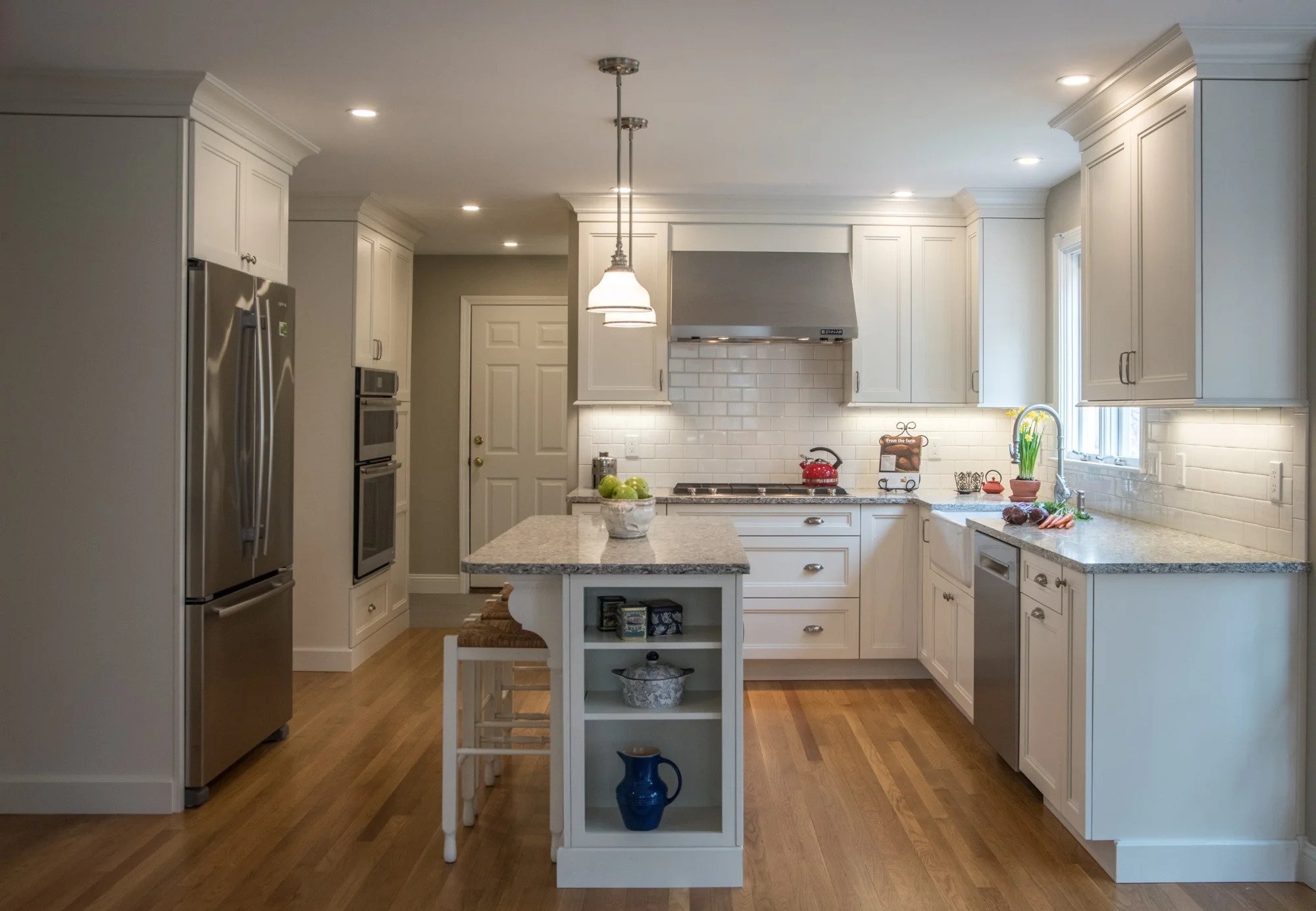
Are White Cabinets Right for Your Kitchen?
White kitchen cabinets can be an excellent choice if you're looking for a bright, versatile appearance that works with a variety of kitchen styles. They provide a neutral foundation that allows you to introduce color, texture, and contrast through countertops, backsplashes, flooring, hardware, and other design elements.
However, your lifestyle and personal preferences should also play a role in the decision. If you're concerned about fingerprints, visible dirt, or regular cleaning, consider the cabinet finish and door style carefully. If you prefer a warmer or more contrasting design, pairing white cabinetry with natural wood, darker countertops, or other complementary materials can help create the look you're after.
Ultimately, the best cabinet color is one that fits your home, your everyday needs, and the overall design you want to achieve.
Choosing white cabinets is just one part of creating a kitchen that feels cohesive and works for your everyday life. Countertops, flooring, lighting, and other finishes all influence how the final space looks and feels. If you're planning a kitchen update, explore our kitchen design services to learn how thoughtful planning can bring these elements together, or browse our completed kitchen projects for design inspiration.
Clearly, there are several things to consider when deciding whether white kitchen cabinets are right for your home. White cabinetry can create a beautiful, bright, and spacious kitchen, but the right shade, finish, and combination of materials will make all the difference. Take the time to consider your preferences and how you use your kitchen so you can create a space you'll enjoy for years to come.